 Back to all Blogs
FSM vs ERP: Which Software Is Better?
Managing a trade or service business today means juggling many moving parts: jobs, teams, schedules, invoices, stock, payments, and reporting. Choosing the right software solutions to handle these tasks is critical.
While ERP (Enterprise Resource Planning) software offers a broad system of record for core business functions, FSM (Field Service Management software) focuses solely on optimising and supporting field operations. Knowing how these solutions differ, complement each other, and ultimately work together is essential for streamlining your business and driving growth.
What is field service management (FSM) software and how does it help?
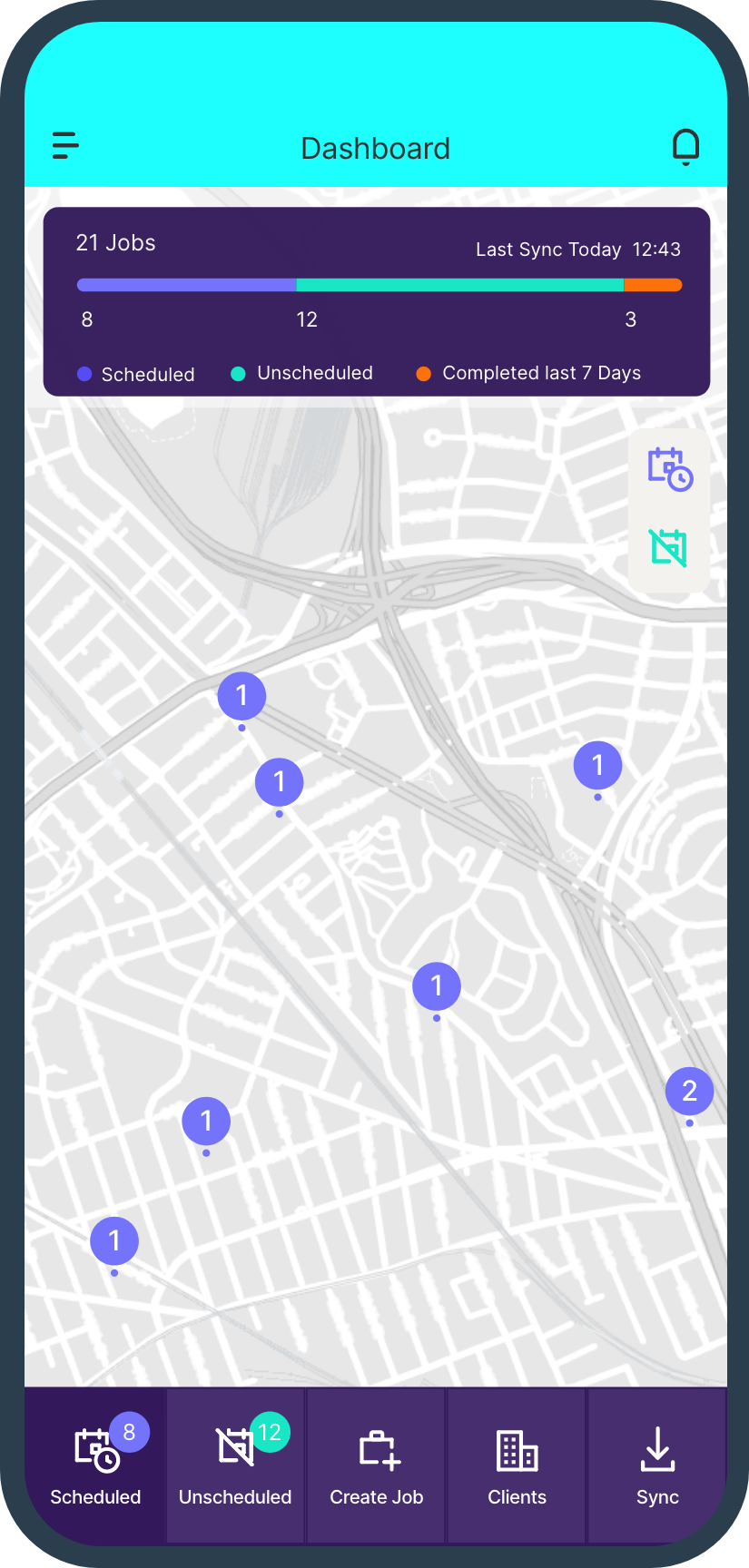
Field Service Management software is purpose-built for businesses with a mobile workforce delivering installations, maintenance, or repairs on-site. FSM optimises scheduling, dispatching, route planning, and work order management, ensuring the right technician with the right skills arrives on time, with all the necessary equipment and information.
It also handles detailed asset tracking, captures job and customer history, and supports real-time communication between field staff and office teams. This software brings clarity and control to day-to-day field operations, improving workforce productivity and customer satisfaction.
FSM typically includes:
- Job and work order management tailored to field activities
- Dynamic scheduling adapting to changes and workers’ availability
- Mobile-friendly apps to access job info and submit reports from anywhere
- Inventory tracking specific to technician vans and field assets
- Preventive maintenance and compliance checklists
- Customer history and preferences for personalised service
These features make FSM indispensable for keeping field service running smoothly and responsively.
See our full guide on field service management explained.
What is enterprise resource planning (ERP) software and what does it cover?
Enterprise Resource Planning software is a comprehensive business management solution that integrates your administrative and operational functions into one system. It centralises finance, accounting, HR, project management, supply chain, manufacturing, and inventory control, providing a single source of truth for business-wide data. ERP helps reduce manual processes, eliminate data silos, and ensure consistent, accurate reporting to inform strategic decisions.
For trade and service businesses, ERP often manages:
- Financial management including invoicing, purchase orders, and expense tracking
- Supply chain and inventory across warehouses and hubs
- Resource planning covering labour capacity and budgeting
While ERP keeps your back office organised and your business compliant, it doesn’t cater deeply to the nuances of managing field teams or customer-facing service delivery.
That’s why purpose-built FSM software like Klipboard includes financial management such as quoting, invoicing, purchase orders, and expense tracking, streamlining operations from booking to billing.
FSM vs ERP: Which is better?
FSM and ERP systems do very different jobs. Once you understand what each one is built for, it becomes clear why many growing trade businesses end up using both rather than choosing one over the other.
Focus:
- FSM is designed specifically for managing field service operations and the mobile workforce.
- ERP manages core administrative, financial, and resource planning functions across the organisation.
User experience:
- FSM software provides real-time, mobile-first tools for technicians on the job.
- ERP is usually desktop-based and geared towards office staff handling back-end processes.
Scheduling and Dispatch:
- FSM includes dynamic scheduling, route optimisation, and dispatching based on skills and location.
- ERP’s scheduling might cover broad resource availability, but lacks the flexibility needed in the field.
Customer and Job Details:
- FSM tracks detailed job history, asset usage, and customer preferences to personalise service.
- ERP holds basic customer records and financial data without field-specific detail.
Communication:
- FSM supports contextual, instant communication between field workers, office, and customers.
- ERP usually facilitates department-level communication but not direct field coordination.
Because of these differences, relying on ERP alone can leave real-time field operations underserved, while many FSM by itself may lack the integration with back-office functions business owners need.
Klipboard’s FSM software incorporates key ERP capabilities to address these challenges. Designed for both mobile and desktop use, it supports field teams while supporting office staff by managing core administrative, financial, and resource planning functions across the business.
Why integrating FSM and ERP maximises business efficiency
The strength lies in combining FSM and ERP into a seamlessly connected system. Integrated properly, this gives trade businesses the best of both worlds, a real-time system of engagement in the field linked to a system of record managing finances and resources.
Benefits of integrating FSM with ERP include:
- Unified Data Access: Field staff see up-to-date job, customer, and inventory info synced from ERP, avoiding errors and rekeying.
- Enhanced Visibility: Managers get deeper insights into technician performance, job progress, and financial impact all in one place.
- Optimised Scheduling: FSM dynamically schedules work using data about resource availability and inventory levels managed by ERP.
- Faster Invoicing and Payments: Job completion in FSM triggers invoicing in ERP automatically to improve cash flow.
- Improved Customer Experience: Access to comprehensive service history and fast communication keeps customers informed and satisfied.
- Operational Efficiency: Streamlined workflows cut down wasted time, manual processes, and costly data duplication.
This integration builds operational clarity and control across your entire trade business, setting the stage for scalable growth without administrative overload.
Navigating the overlap: FSM, ERP, and CRM in service businesses
Many service businesses also use CRM (Customer Relationship Management) software to manage sales leads, customer communications, and marketing.
CRM focuses outward on the customer relationship lifecycle, ERP focuses inward on operational resources, and FSM focuses on executing service delivery efficiently.
While some ERPs include basic CRM modules and FSM may integrate with field service CRM software systems, understanding their different purposes helps business owners avoid buying overlapping or incomplete tools.
The best strategy is to identify primary business needs and choose modular software solutions designed to work together flexibly.
Choosing the right FSM and ERP solutions for your trade business
When evaluating FSM and ERP platforms, consider:
- Modularity: Only adopt what you need now but have room to scale.
- Integration capabilities: Will the FSM integrate cleanly with your ERP and other systems?
- Ease of use: Field apps must be intuitive for technicians on the go, and ERP interfaces must be friendly for office staff.
- Specific industry features: Look for solutions tailored to trade sectors like plumbing, electrical, construction with workflows and compliance.
- Vendor support and training: Ensure you have access to expertise to implement and grow the system effectively.
Selecting software that fits your current and future business realities helps maximise ROI and minimises disruption.
FSM vs ERP: Which software better supports compliance?
Compliance is a critical consideration when choosing between FSM and ERP software. Trade and service businesses must meet safety, financial, and regulatory requirements without adding unnecessary admin or risk.
FSM vs ERP compliance overview:
- FSM software supports operational compliance by tracking job completion, safety checklists, certifications, audits, and field documentation in real time.
- ERP software focuses on financial and administrative compliance, including accounting standards, payroll, procurement, and reporting.
- FSM + ERP together provide end-to-end compliance visibility, connecting what happens in the field with financial and regulatory records in the office.
In practice, compliance gaps often appear when field and back-office systems don’t talk to each other, increasing risk and manual work. Klipboard brings FSM and ERP capabilities together in one platform, helping trade businesses maintain operational and financial compliance with real-time visibility across jobs, teams, and resources.
Bringing everything together with Klipboard
A platform like Klipboard brings together core features from both FSM and ERP software in one intuitive system. If juggling jobs, teams, finance, and multiple disconnected platforms is slowing your trade business down, Klipboard pulls everything into a single, connected view.
Built to support both field and office teams, Klipboard combines field service management with essential ERP capabilities like financial oversight, resource planning, and administration. The result is software that adapts to how your business actually operates day to day, rather than forcing you into rigid systems.
Ready to explore a smarter, simpler, connected approach to managing your trade business? Our team is here to help you discover how Klipboard can streamline your entire operation and support your next stage of growth. Reach out today and take the complexity out of running a successful trade business.